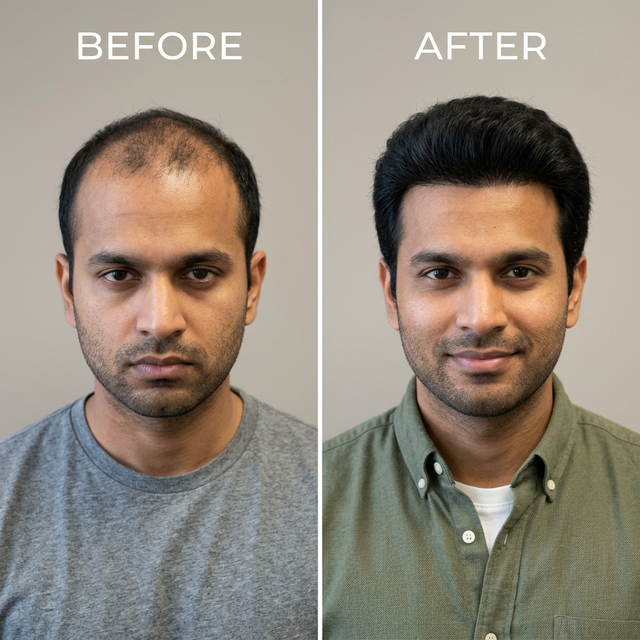
Understanding Is Prp Effective can significantly impact your final results. Before investing in any hair loss treatment, you deserve to know the truth: is PRP actually effective, or is it just hype? At DenceSpot Clinic Gurgaon, we believe in evidence-based medicine. Here is what the science says.
Understanding Is Prp Effective can significantly impact your final results. In the world of hair loss treatments, claims often outpace evidence. But PRP (Platelet-Rich Plasma) therapy is different — it has been studied extensively in peer-reviewed clinical trials. This article examines the scientific evidence objectively, so you can decide with confidence.
The Scientific Evidence for PRP Effectiveness
Let us look at what major clinical studies have found:
Randomized Controlled Trials (The Gold Standard)
Many patients ask us about Is Prp Effective during their consultations. Gentile et al., 2015 (Stem Cells Translational Medicine): This landmark study used half-head design — PRP on one side, placebo on the other. Results: PRP-treated areas showed 45.9% more hair density and significantly improved hair caliber. This study is widely cited as definitive proof of PRP effectiveness.
Many patients ask us about Is Prp Effective during their consultations. Alves & Grimalt, 2016 (Dermatologic Surgery): A placebo-controlled trial with 25 patients showed that PRP-treated areas had significantly higher hair counts at 3 and 6 months compared to saline-injected control areas.
Rodrigues et al., 2019: A double-blind RCT found that PRP produced a 29% increase in hair density compared to 2% in the placebo group — a statistically significant difference.
Meta-Analyses (Evidence Synthesis)
2019 Meta-Analysis (Dermatologic Surgery): Pooling data from 11 RCTs with over 400 patients, this analysis concluded: "PRP injections are associated with a significant increase in hair density and hair diameter in patients with androgenetic alopecia."
2020 Cochrane-Style Review: After evaluating all available evidence, reviewers rated PRP as having "moderate evidence of effectiveness" for androgenetic alopecia — placing it among the better-studied hair loss treatments.
How Effective Is PRP? — The Numbers
Based on aggregated clinical data, here are the effectiveness metrics:
- Hair density increase: 20-45% improvement in treated areas
- Hair thickness increase: 20-30% improvement in individual hair caliber
- Hair fall reduction: 50-70% decrease in daily shedding
- Patient satisfaction: 70-85% of patients report being satisfied with results
- Response rate: 70-90% of suitable candidates show measurable improvement
These numbers make PRP one of the most effective non-surgical, non-pharmaceutical options for hair loss treatment.
Factors That Determine PRP Effectiveness
Not all PRP treatments are created equal. Several factors significantly influence how effective your PRP therapy will be:
1. Platelet Concentration
The concentration of platelets in your PRP preparation directly affects results. Studies show that PRP with 5-8x platelet concentration is optimal. Too low (less than 2x) is ineffective; too high (more than 10x) may actually inhibit growth. At DenceSpot, our double-spin technique consistently achieves the optimal range.
2. Stage of Hair Loss
Early intervention yields dramatically better results. Patients with Norwood Grade 2-3 hair loss respond far better than those with Grade 5-6. This is because early-stage patients have more dormant (but viable) follicles that PRP can reactivate. Early treatment is key — the same principle applies to all hair loss prevention strategies.
3. Treatment Protocol
A single PRP session rarely produces meaningful results. The evidence supports 3-4 initial sessions spaced 3-4 weeks apart, followed by maintenance every 4-6 months. Incomplete protocols lead to inferior outcomes.
4. Patient Health and Blood Quality
Your platelet count and quality matter. Patients with low platelet counts, autoimmune conditions, or chronic illnesses may have reduced PRP effectiveness. Nutritional status also plays a role — adequate vitamins and minerals support better platelet function.
5. Preparation Method
The PRP kit and centrifugation technique affect platelet yield. FDA-approved kits with standardized protocols produce more consistent results than improvised methods.
PRP Effectiveness Compared to Other Treatments
PRP vs Minoxidil
A 2014 study in the British Journal of Dermatology found that topical caffeine (a component studied alongside PRP) showed results comparable to 5% minoxidil. PRP itself has shown similar or superior results in several comparative studies, with the advantage of not requiring daily application.
PRP vs Finasteride
While finasteride blocks DHT systemically, PRP stimulates growth factors locally. The two work through entirely different mechanisms, which is why combining them often produces superior results to either alone.
PRP vs Low-Level Laser Therapy
Both PRP and LED/laser therapy show evidence of effectiveness for hair growth. PRP typically produces more robust results in clinical trials, but combining both creates a synergistic effect.
PRP + Microneedling
The combination of PRP with microneedling has emerged as one of the most effective non-surgical protocols. Microneedling creates micro-channels that enhance PRP absorption, and it also triggers the body's wound-healing response — adding to the growth factor stimulation.
When PRP May Not Be Effective
Honest medicine requires acknowledging limitations. PRP may not be effective in these situations:
- Complete baldness: If follicles have been dormant for many years and have permanently atrophied, PRP cannot revive them.
- Scarring alopecia: When hair loss is caused by scarring (burns, trauma, certain autoimmune conditions), the follicle structure is destroyed.
- Active autoimmune alopecia: Conditions like alopecia areata in active phase require immune-modulating treatment first.
- Medication-related hair loss: Chemotherapy or other drug-induced hair loss requires addressing the underlying cause.
- Single session: One PRP session alone is insufficient — effectiveness requires commitment to the full protocol.
For patients with advanced hair loss, a hair transplant combined with PRP often delivers the best comprehensive results.
The DenceSpot Approach to Maximum Effectiveness
- Pre-Treatment Assessment: Trichoscopy, blood tests, and medical history review to confirm candidacy.
- Optimized Preparation: FDA-approved double-spin centrifugation for maximum platelet concentration.
- Evidence-Based Protocol: 3-4 sessions initially, with maintenance schedule based on individual response.
- Combination Therapy: Integration with microneedling, LED therapy, or medical management when indicated.
- Outcome Tracking: Digital trichoscopy at each visit to objectively measure progress.
Get an Evidence-Based Assessment
Find out whether PRP is the right treatment for your specific hair loss pattern. Our dermatologists provide honest, science-backed recommendations.
Book Expert ConsultationFrequently Asked Questions
What percentage of patients find PRP effective?
Clinical data shows 70-90% of suitable candidates experience positive results from PRP therapy. Effectiveness depends on the stage of hair loss, platelet quality, treatment protocol, and patient compliance with follow-up sessions.
Is PRP scientifically proven?
Yes, PRP for hair loss is supported by multiple randomized controlled trials and meta-analyses published in peer-reviewed dermatology journals. It is classified as an evidence-based treatment by leading dermatological associations.
How effective is PRP compared to medications?
PRP shows comparable results to minoxidil in several studies and works through a completely different mechanism. Many dermatologists recommend PRP alongside medications for the best outcomes, as the two approaches complement each other.
Is PRP effective for female hair loss?
Yes, PRP is particularly effective for female pattern hair loss (diffuse thinning). Women often respond better than men because their hair loss typically involves miniaturization rather than complete follicle death.
Does the effectiveness of PRP decrease over time?
The initial results from PRP are sustained with maintenance sessions every 6-12 months. Without maintenance, the benefits may gradually diminish as the natural miniaturization process continues. Consistent follow-up preserves effectiveness.
Is PRP effective after a hair transplant?
Highly effective. PRP accelerates healing, improves graft survival rates, and strengthens existing native hair after transplant surgery. Many transplant surgeons recommend PRP as part of their post-operative protocol.