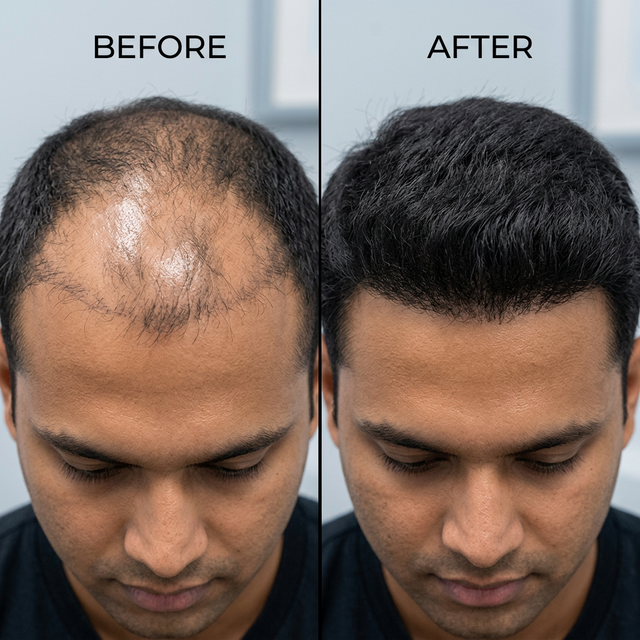
For most people, surgery of any kind comes with a degree of anxiety—and a hair transplant in Gurgaon is no exception. The best antidote to that anxiety is detailed, honest knowledge of exactly what will happen from the moment you walk through the clinic door to the moment you leave. This step-by-step guide covers every phase of the procedure so you know precisely what to expect.
Hair transplant surgery has an excellent safety profile and a high patient satisfaction rate. The procedure typically lasts 6–10 hours depending on the number of grafts required, and patients are fully conscious throughout, listening to music, watching content, or simply resting. Understanding each step removes the fear of the unknown and helps you arrive on procedure day calm, prepared, and ready.
Step 1: Day-of Preparation — What to Do Before You Arrive
Your clinic will give you a pre-operative preparation checklist in the days leading up to surgery, but the morning of the procedure has its own specific requirements. You should wash your hair thoroughly with the shampoo provided by the clinic—no styling products, dry shampoo, or conditioner. Wear a loose, button-down shirt or zip-up top; you cannot pull a tight shirt over your head after the procedure without disturbing grafts.
Eat a full, nutritious breakfast before you come in. You will be in the clinic for many hours, and your blood sugar needs to remain stable throughout. Avoid caffeine in excess, as it can slightly increase scalp sensitivity. Do not take aspirin, ibuprofen, or any blood-thinning supplements (fish oil, Vitamin E, garlic) for at least a week prior—your surgeon should have confirmed this during your pre-op consultation.
Bring entertainment: earphones, a tablet, a book, or a podcast playlist. The extraction phase in particular involves long stretches where you will be lying face-down and will benefit enormously from something to keep your mind occupied. Being mentally prepared is just as important as physical preparation, so reviewing what you know about hair transplant eligibility and candidacy can reinforce your confidence in the decision you have made.
Step 2: Arrival, Consultation, and Pre-Op Photography
When you arrive at the clinic, you will be greeted by your surgical coordinator and shown to a preparation room. The first task is high-resolution baseline photography of your scalp from multiple standardised angles. These images serve as the permanent record against which your results will be measured at every follow-up appointment. A trichoscopic scan may also be performed to document your current native hair density.
Your surgeon will then meet with you for a pre-operative briefing. This is your opportunity to ask final questions, confirm the graft count agreed in your consultation, and review any last-minute concerns. The surgeon will also review your medical history form and confirm that no contraindications have emerged since your initial visit.
Step 3: Hairline Design and Marking
Hairline design is arguably the most artistically consequential step of the entire procedure. Your surgeon will use a surgical marking pen to draw the proposed hairline on your forehead while you are seated upright. This position is critical—lying down shifts facial tissue and makes accurate proportion assessment impossible.
The hairline must be designed to complement your facial shape, age, and the density of grafts available. A hairline positioned too low looks unnatural and becomes increasingly so as you age; one placed too high fails to frame the face adequately. The surgeon will typically show you the proposed design in a mirror and invite your input before finalising it. Do not hesitate to speak up if something feels wrong—this is your face, and the design is permanent.
The donor area on the back and sides of the scalp is also mapped at this stage. The surgeon calculates the safe zone—the region where hair is genetically resistant to DHT and will remain stable for life—and marks the boundaries of extraction within it.
Step 4: Shaving the Donor Area
For standard FUE, the donor area is trimmed to approximately 1 mm in length. This allows the surgeon to see each follicular unit clearly for extraction. In cases where a patient requires a non-shaven or partially shaven FUE (to keep the procedure less detectable socially), only small strips are trimmed in a scattered pattern. However, this approach is more time-consuming and may slightly reduce the precision of extraction.
The recipient area (top of scalp) may also be trimmed slightly or left at its current length depending on the technique being used. DHI implantation typically allows slightly longer recipient hair to remain, which can help with post-op camouflage.
Step 5: Local Anaesthesia Administration
This is the step most patients are nervous about, and it is worth addressing honestly. Local anaesthesia injections in the scalp are uncomfortable. The sensation is typically described as a series of sharp stings or pressure points lasting about 60–90 seconds per zone. The donor area and the recipient area are each anaesthetised separately.
Many clinics now use a vibration device alongside the injections—this technique, called the Gate Control theory of pain management, uses vibration to interrupt pain signal transmission and makes the injections significantly more tolerable. A topical numbing cream is usually applied 30 minutes before injections begin to further reduce sensitivity.
Once the anaesthesia takes full effect—which happens within 2–5 minutes of each injection—you will feel absolutely nothing in the treated areas. The procedure from this point forward is entirely painless. Patients who expected the worst often report being pleasantly surprised by how comfortable they feel once fully numbed.
Step 6: FUE Graft Extraction
With the donor area anaesthetised, the surgeon begins graft extraction using a micro-punch tool—typically between 0.7 mm and 0.9 mm in diameter. The punch is rotated around each follicular unit to score the surrounding tissue, and the graft is then gently lifted free using fine forceps.
This process is repeated hundreds or thousands of times depending on your graft count. A medium session of 2,000 grafts takes approximately 2–3 hours of extraction time. During this phase, you will be lying face-down on a specially designed surgical couch with your face resting in a cushioned headrest. Most patients find this position comfortable and use the time to listen to music or rest.
As grafts are extracted, they are immediately placed into a chilled preservation solution by a trained assistant. They are then sorted under magnification by follicular unit size (singles, doubles, triples) and kept at a controlled temperature until implantation. The quality of this storage protocol has a direct bearing on graft survival—a point explored in more detail in our guide on why patients don't always get desired hair transplant results.
Step 7: Recipient Site (Channel) Creation
Once extraction is complete or nearing completion, the patient is repositioned lying on their back or seated upright, and the surgeon begins creating recipient sites in the bald or thinning area. These are tiny incisions—or channels—made using fine-gauge needles or micro-blades, into which each graft will be placed.
The angle, depth, and direction of each channel is critical to achieving a natural-looking result. Channels must follow the native hair growth direction, which varies significantly across the scalp. The frontal hairline requires the shallowest, most forward-leaning angles. The crown requires channels that mimic the natural spiral or whorl pattern of hair growth in that region.
The density of channel creation also determines the final density of hair coverage. Creating too many channels too close together risks compromising blood supply; too few creates a sparse result. This balance is one of the most technically demanding aspects of the procedure and requires genuine surgical expertise.
In DHI (Direct Hair Implantation), a Choi implanter pen is used instead—this device extracts and implants simultaneously without a separate channel creation step, allowing for slightly higher density and no delay between channel creation and graft placement.
Step 8: Graft Implantation
With channels created, the surgical team begins placing each sorted graft into its designated site. Single-hair grafts are used along the frontal hairline to create a soft, natural-looking edge. Double and triple-hair grafts are placed behind the hairline to build density in the mid-scalp and crown.
This phase typically takes 2–4 hours depending on graft count. The patient is fully awake and can speak with the team. Some patients choose to nap; others prefer conversation or entertainment. You may feel mild pressure sensations during implantation but no pain.
Throughout this phase, your surgeon monitors the grafts for signs of desiccation (drying out) and ensures implantation proceeds at a pace that maintains graft viability. Periodic saline misting of the scalp keeps the transplanted area hydrated.
Step 9: Immediate Post-Operative Care
When the last graft is placed, your scalp will be gently cleaned and the donor area dressed with a light bandage. The recipient area is left open—never tightly bandaged—to allow the newly placed grafts to settle without pressure. You will be given a detailed written aftercare guide covering how to sleep (elevated pillow position to reduce swelling), how to wash your scalp starting from day 3 or 4, medications to take (antibiotics, anti-inflammatory, and often minoxidil or finasteride), and a list of activities to avoid.
Post-procedure, mild forehead swelling is common in the first 3–5 days as the anaesthetic and saline used during the procedure gradually dissipate downward. This is normal and resolves on its own. Cold compresses applied to the forehead (not the scalp) can help minimise it.
Many clinics also offer an immediate post-procedure PRP hair treatment session on the same day, or schedule the first PRP session within a few weeks. This accelerates healing, improves graft survival, and sets the foundation for stronger, faster growth. It is one of the best investments you can make immediately following your surgery.
Step 10: Going Home — What the First 24 Hours Look Like
You will be discharged on the same day as your procedure, typically in the late afternoon or evening. You cannot drive yourself home—the mild sedative given before anaesthesia, combined with a long day of lying still, means you will feel drowsy and should have a companion drive you or take a cab.
At home, you will sleep with your head elevated at approximately 45 degrees using two or three pillows. This position reduces swelling and prevents you from rolling onto the recipient area during the night. Most patients experience minimal discomfort on the first night—a mild tightness or tenderness in the donor area that is well-managed with the prescribed pain relief.
The grafts are not fully anchored in the first 72 hours. During this critical window, avoid touching the transplanted area, sweating heavily, exposing the scalp to direct sun or wind, and bending forward with your head below your waist. Following these instructions carefully directly protects graft survival and sets the tone for a successful recovery.
For patients who want to further support their scalp health during recovery, scalp microneedling sessions can be introduced from around 3–4 months post-op to stimulate surrounding native follicles. Additionally, addressing any underlying scalp issues—such as getting proper dandruff treatment if needed—ensures the scalp environment remains optimal for long-term graft health.
Ready to take the next step? Schedule a consultation with our team at DenceSpot Gurgaon and we will walk you through exactly what your procedure day will look like based on your individual case.
Ready to Experience the DenceSpot Difference?
Now that you know exactly what happens during hair transplant surgery, the only question left is: are you ready? At DenceSpot Clinic Gurgaon, every procedure day is managed with surgical precision, genuine patient care, and a structured recovery plan. Book your free consultation today.
Book Free ConsultationFrequently Asked Questions
Is hair transplant surgery painful?
The procedure itself is not painful once local anaesthesia is in effect. The most uncomfortable moment is the anaesthesia injection phase, which lasts 1–2 minutes per zone. Most patients rate the overall procedure experience as far more comfortable than they anticipated. Post-operative discomfort in the donor area is mild and typically managed with standard over-the-counter pain relief for 2–3 days.
How long does a hair transplant procedure take from start to finish?
Total procedure time varies based on the number of grafts. A session of 1,500 grafts typically takes 5–7 hours; a larger session of 2,500–3,500 grafts can take 8–10 hours. All work is completed in a single day. You will arrive in the morning and be discharged in the late afternoon or early evening.
Can I eat and drink during the procedure?
Yes. You will have scheduled breaks during the procedure—typically one longer break in the middle of the day for a meal and rest. The clinic will provide or recommend food, and you can sip water throughout. Staying hydrated and maintaining blood sugar is important during a long procedure, so do not skip your breaks.
When can I return to work after hair transplant surgery?
Most patients with desk-based or remote work can return within 3–5 days. If your work involves physical labour, heavy lifting, or significant sweating, a minimum of 2 weeks is recommended before returning. The donor area usually appears visibly healed within 7–10 days, and the transplanted area can be camouflaged with light hair styling by week 2–3.
What should I avoid in the days immediately after surgery?
In the first 72 hours: avoid touching the transplanted area, sleeping face-down, strenuous activity, alcohol, smoking, direct sun exposure, and swimming. In the first two weeks: avoid gym workouts, saunas, tight hats, and any activity that causes significant sweating or scalp trauma. Your clinic will provide a full written aftercare protocol to follow.