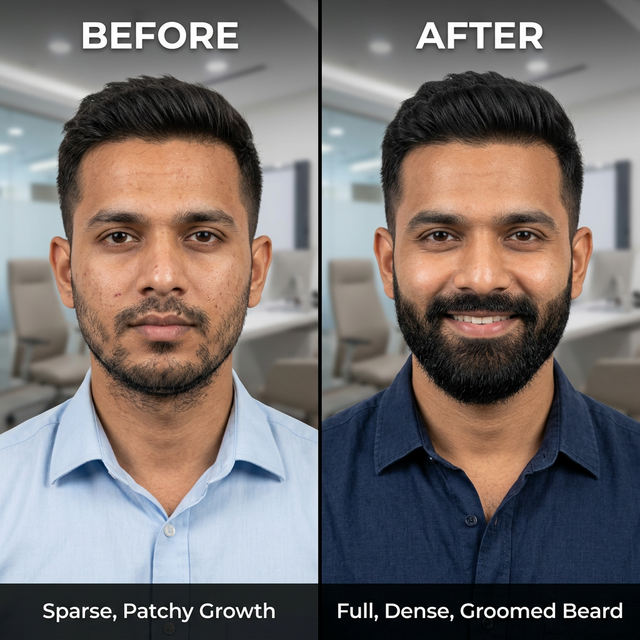
You notice the first perfectly round, smooth patch in your beard one morning. Then another. Then a third. The patches are not caused by genetics, nor by poor grooming — they are caused by your own immune system attacking your hair follicles. This is alopecia barbae, and it demands a clinically informed approach to treatment. The question many patients bring to us is: can beard transplant help?
At DenceSpot Clinic, offering specialist beard transplant in Gurgaon, Dr. Nyra treats alopecia barbae in Gurgaon with a structured, evidence-based protocol that begins with stabilisation and, where appropriate, concludes with permanent surgical restoration. This guide explains exactly what alopecia barbae is, how it differs from genetic patchy beard, when an alopecia barbae beard transplant is appropriate, and what to realistically expect from treatment.
What is Alopecia Barbae? Understanding the Autoimmune Mechanism
Alopecia barbae is a localised autoimmune condition causing the body's T-lymphocyte cells to mistakenly identify the hair follicle as a foreign threat and launch an immune attack against it. This immune assault disrupts the follicle's normal growth cycle, causing the hair shaft to detach and fall out, while the follicle itself enters a state of immune-suppressed dormancy.
The result is the characteristic presentation of alopecia barbae: one or more circular or oval bald patches within the beard zone — most commonly on the cheeks, jawline, or chin. The patches have a distinctively smooth, slightly shiny surface (in contrast to the rough texture of normal skin), and may occasionally have a faint reddish border during active flare phases. The scalp is typically unaffected in pure alopecia barbae, though some patients may have concurrent alopecia areata affecting both areas.
Critically, alopecia barbae is not caused by genetics, poor hygiene, diet, or lifestyle factors. It is an immune system disorder with a multifactorial trigger profile including stress, other autoimmune conditions (thyroid disease, rheumatoid arthritis), and genetic predisposition. Understanding this distinction is essential because it changes the entire treatment approach — including the timing of any surgical intervention.
How is Alopecia Barbae Diagnosed?
Accurate diagnosis is the critical first step in the DenceSpot alopecia barbae treatment protocol. Many patients arrive having self-diagnosed based on internet searches, but several other conditions can produce circular bald patches in the beard that require entirely different treatments.
Dr. Nyra uses a combination of diagnostic tools to confirm alopecia barbae and rule out alternative causes:
- Trichoscopy (Dermoscopy): A non-invasive magnified examination of the skin and follicle base that reveals the characteristic "exclamation mark" hair stubs and "yellow dots" sign of alopecia areata/barbae at a follicular level invisible to the naked eye.
- Clinical History Assessment: Documenting the timeline of patch onset, progression rate, and any prior spontaneous regrowth episodes to establish the activity pattern of the condition.
- Blood Panel: Testing thyroid function, ANA (anti-nuclear antibody), and inflammatory markers to identify any concurrent autoimmune conditions that may need to be medically managed before surgical consideration.
- Tinea Barbae Exclusion: A fungal skin scraping test to rule out tinea barbae (ringworm of the beard), which produces visually similar bald patches but is treated with antifungal medication — not transplant surgery.
Non-Surgical Alopecia Barbae Treatments: The First Line
Surgery is never the first intervention for alopecia barbae. Depending on the activity level and extent of the condition, Dr. Nyra's non-surgical treatment protocol for patchy beard treatment alopecia includes:
- Topical Corticosteroids: Applied directly to active patches, corticosteroid creams or foams suppress the localised T-cell immune attack, allowing the dormant follicles to re-enter the growth phase. This is effective for mild, recently-onset alopecia barbae and can produce significant spontaneous regrowth in responsive cases.
- Intralesional Corticosteroid Injections: For stubborn patches that do not respond to topical treatment, direct injection of corticosteroid solution into the patch tissue delivers a concentrated immune suppressant directly to the affected follicles. This is a highly effective office procedure with minimal discomfort.
- PRP (Platelet-Rich Plasma) Therapy: At DenceSpot, PRP is a cornerstone adjunctive treatment for alopecia barbae. Growth factors including VEGF, FGF, and IGF-1 in concentrated PRP injections help modulate the inflammatory microenvironment around affected follicles, encouraging reactivation of dormant follicular stem cells. A course of 3-4 sessions is typically recommended before considering transplant candidacy.
- Minoxidil (Topical): Applied to affected areas, minoxidil improves local blood supply to dormant follicles and may accelerate the regrowth of follicles that are responding to immune suppression treatment.
When is Alopecia Barbae Beard Transplant Appropriate?
The cardinal rule of alopecia barbae beard transplant is non-negotiable: the condition must be fully stabilised before any surgical intervention is considered. Performing a transplant on an active or recently active autoimmune condition is contraindicated — the same immune attack that destroyed the original follicles can attack the newly transplanted ones.
At DenceSpot Clinic, the minimum criteria for transplant candidacy in alopecia barbae patients are:
- A documented period of at least 12 consecutive months with no new patch formation and no active inflammation around existing patches.
- Normal or suppressed inflammatory markers on blood testing, with no active concurrent autoimmune flare.
- Patches that have remained bald for the entire stable period with no spontaneous regrowth — confirming the follicles are permanently dormant rather than in a temporary immune-suppressed state.
- Sufficient donor zone density to yield the required grafts without over-harvesting.
When these criteria are met, alopecia barbae beard transplant treatment Gurgaon at DenceSpot produces excellent, lasting results. The transplanted follicles — harvested from the scalp donor zone, which is immunologically distinct from the beard zone — are generally more resilient to the alopecia barbae autoimmune attack. Long-term follow-up data shows that the vast majority of transplanted follicles continue growing permanently in stable alopecia barbae patients.
Dr. Nyra's Integrated Approach to Alopecia Barbae
What distinguishes the DenceSpot approach to autoimmune beard loss treatment Gurgaon is the comprehensive, staged treatment pathway. Rather than immediately recommending surgery for every patchy beard patient, Dr. Nyra begins with a thorough diagnostic assessment, prescribes the appropriate non-surgical stabilisation protocol, and monitors the patient's progress over the required stability period before any surgical planning begins.
This staged approach protects patients from premature surgical intervention, maximises the chance of non-surgical resolution where possible, and ensures that when surgery is performed, it is done on the most favourable biological terrain for the best possible, most permanent outcome. The combination of PRP sessions during the stabilisation phase — which actively support follicle health — followed by a precision DHT beard transplant once stability is confirmed, represents the most comprehensive, evidence-based pathway available for alopecia barbae treatment in Gurgaon.
Patients who have suffered the confidence impact of circular beard patches for years often describe the transformation after a successful beard transplant as life-changing. The permanent coverage of these previously immune-destroyed zones restores not just the beard but the profound sense of normality and self-assurance that alopecia barbae quietly erodes over time.
Get an Expert Assessment for Your Alopecia Barbae
Whether your condition is newly diagnosed and active, or you have been stable for years and want to explore surgical restoration, DenceSpot Clinic Gurgaon has the expertise to guide you at every stage. Book a free consultation with Dr. Nyra and get a clear, honest, medically-informed treatment plan.
Book a Free ConsultationFrequently Asked Questions
What is alopecia barbae and is it the same as alopecia areata?
Alopecia barbae is a specific subtype of alopecia areata that affects only the beard area. Alopecia areata is the broader autoimmune condition that can affect any hair-bearing area of the body — scalp, beard, eyebrows, or body hair. Alopecia barbae is the clinically localised form producing the characteristic circular bald patches specifically within the beard zone. Both are caused by the same T-cell autoimmune mechanism.
Can beard transplant permanently cure alopecia barbae?
Beard transplant does not cure the underlying autoimmune condition — alopecia barbae is a systemic immunological disorder and no surgical procedure eliminates it. However, for patients whose alopecia barbae has stabilised (no new patches for 12+ months), a beard transplant using DHT-resistant donor follicles fills the existing bald patches permanently. If the autoimmune activity reactivates, new patches may form in other areas, but the transplanted follicles themselves are generally more resistant to immune attack.
How long must alopecia barbae be stable before a beard transplant?
Dr. Nyra at DenceSpot Clinic requires a minimum of 12 months of documented stability before proceeding with a beard transplant for alopecia barbae. Stability means no new bald patches forming and no active inflammation around existing patches. Some surgeons require 18-24 months of stability for very unpredictable cases. Blood tests and trichoscopy are used to confirm the condition is in a dormant phase.
What is the role of PRP in alopecia barbae treatment?
PRP (Platelet-Rich Plasma) therapy plays a dual role in alopecia barbae management at DenceSpot. First, as a standalone treatment, PRP injections can help regulate the inflammatory immune response in active or mildly active cases, encouraging natural regrowth in some patients. Second, as an adjunct to beard transplant in stabilised cases, PRP significantly improves graft survival and accelerates growth. Dr. Nyra typically recommends a course of 3-4 PRP sessions before transplant candidacy assessment.
Are the results of beard transplant for alopecia barbae permanent?
The transplanted follicles themselves grow permanently in the vast majority of cases. Because donor follicles are taken from the scalp — which is not typically targeted by the alopecia barbae autoimmune response — they tend to be more resilient than the original beard follicles that were destroyed. Long-term studies show that transplanted follicles survive in alopecia barbae patients at rates comparable to standard genetic beard transplants, provided the condition remains stable.