DENCESPOT
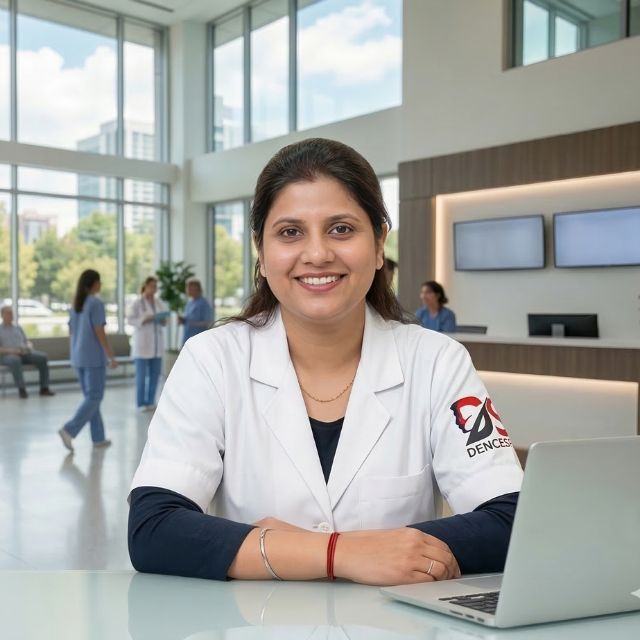
By Dr. Nyra, MD (Dermatology) · 8+ Years Experience

Beard Transplant
in Gurgaon

Struggling with a patchy or uneven beard? Get permanent, natural-looking facial hair with advanced FUE & DHT transplant techniques. Performed personally by Dr. Nyra (MD Dermatology) at Dencespot Clinic, Sector 39, Gurugram. Prices start at ₹40,000.

MD (Dermatology) – Board Certified
5,000+ Successful Procedures
95–98% Graft Survival Rate
4.9★ Google Rating (109 Reviews)
📍 C Block, Sector 39, Gurugram · Open Mon–Sat 10 AM – 8 PM
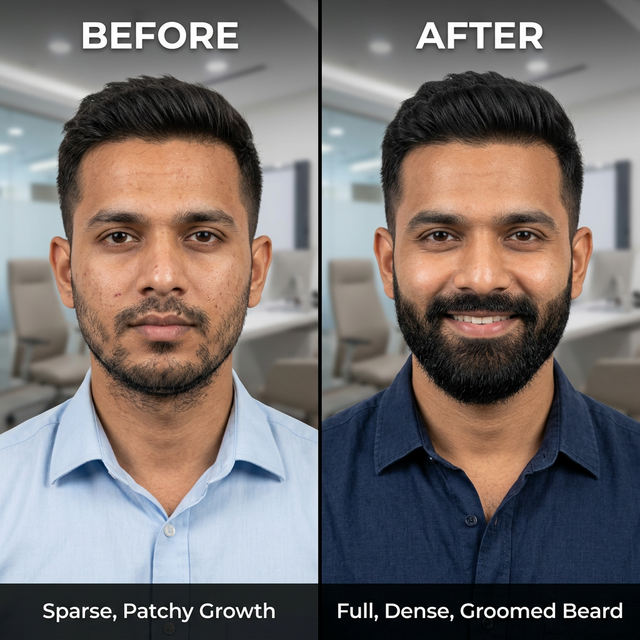
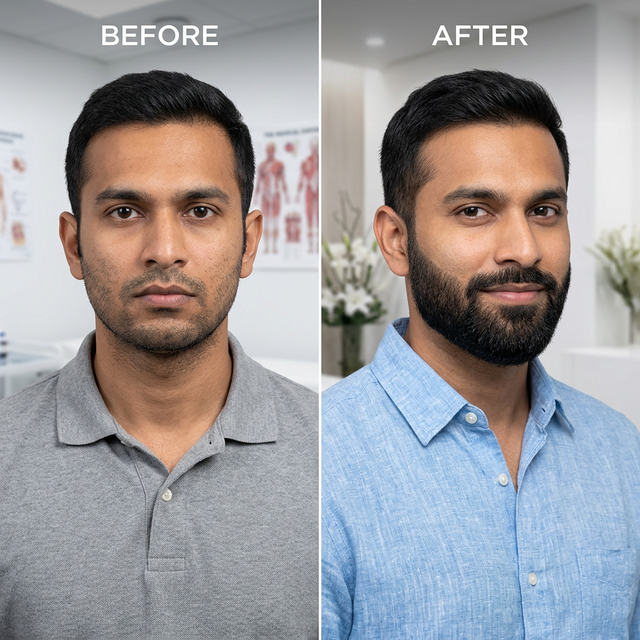
Patient before and after displaying successful beard transplant results
Verified Patient Outcome

100% Lifelong Growth

Grafts blend flawlessly with native hair
Written & medically reviewed by Dr. Nyra, MD (Dermatology) · Last updated: · 12 min read

What Is a Beard Transplant? A Dermatologist's Complete Guide

A beard transplant is a minimally invasive cosmetic surgical procedure that permanently restores facial hair in areas affected by genetic patchiness, scarring, or hormonal imbalances. The procedure works by relocating healthy, DHT-resistant hair follicles from the back of your scalp (the occipital donor area) to the beard, moustache, jawline, or sideburn regions.

In my 8+ years of performing facial hair restoration at Dencespot Clinic in Gurgaon, I have observed that the most common patients seeking a beard transplant fall into three categories: young men in their mid-twenties with genetically sparse facial hair, individuals with scar-induced bald patches from acne or burns, and those recovering from alopecia barbae (an autoimmune condition).

The science behind beard transplants relies on a well-established principle called donor dominance — documented extensively in peer-reviewed dermatological literature (Bernstein et al., Journal of Dermatologic Surgery). Simply put, hair follicles harvested from the back of the scalp retain their genetic properties permanently, regardless of where they are transplanted. This means your new beard hair will grow for a lifetime — you can wash, trim, shave, and style it exactly like natural facial hair.

At our clinic in Sector 39, Gurugram, we use two primary techniques: FUE (Follicular Unit Extraction) and DHT (Direct Hair Transplant). After personally performing over 5,000 procedures, I recommend DHT for most beard transplant cases due to its superior graft survival rate of 95–98%, compared to 90%+ with standard FUE. The near-zero out-of-body time in DHT is particularly critical for the face, where skin is thinner and more vascularized than the scalp.

Dr. Nyra – Board Certified Dermatologist at Dencespot Clinic Gurgaon

Dr. Nyra

Verified Author

MBBS · MD (Dermatology, Venereology & Leprosy) · Fellowship in Aesthetic Dermatology

Chief Consultant Dermatologist & Hair Restoration Specialist at Dencespot Clinic, Gurgaon. Member of the International Society of Hair Restoration Surgery (ISHRS). Over 8 years of hands-on clinical experience with 5,000+ FUE/DHT procedures performed.

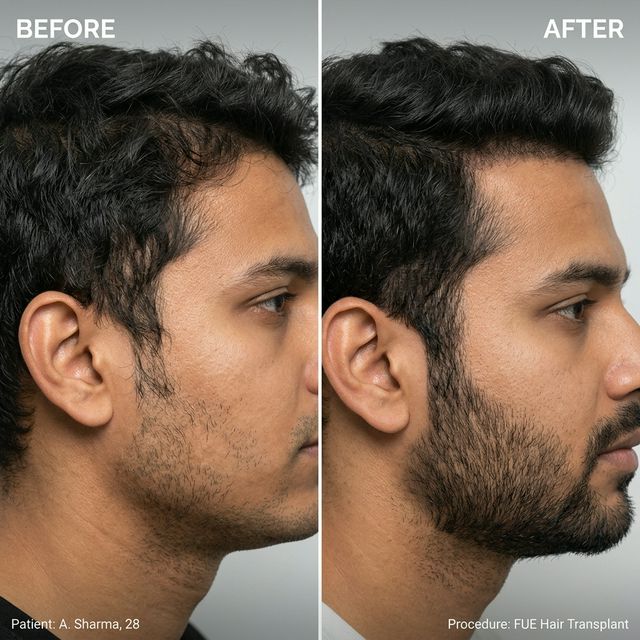
Close-up showing patchy beard areas on Indian male patient before FUE beard transplant at Dencespot Clinic Gurgaon

How Does a Beard Transplant Actually Work?

A beard transplant is a precision surgical procedure that permanently restores facial hair density across the cheeks, chin, moustache, jawline, and sideburns. Here is what happens during the procedure, step by step:

1. Follicle Extraction: Using micro-punches measuring just 0.6–0.9 mm in diameter, individual follicular units (1–3 hairs each) are carefully extracted from the DHT-resistant occipital region at the back of your scalp. This area is chosen because these follicles are genetically programmed to resist hormonal hair loss.

2. Precision Implantation: Each follicle is then artistically implanted into the facial recipient sites at acute angles of 15–30 degrees to the skin surface. This angle is critical — it replicates the natural emergence pattern of beard hair, ensuring the transplanted hair lies flat against the skin and grows in the correct direction. In our experience, getting this angle wrong is the #1 reason for unnatural-looking results at less experienced clinics.

3. Permanent Growth: Because the entire follicular unit — including its dermal papilla (the growth engine) and blood supply network — is relocated intact, the transplanted hair behaves identically to your natural facial hair. After a brief shedding phase at weeks 2–4, it enters permanent growth cycles. You can wash, trim, and style it indefinitely.

Clinical Note from Dr. Nyra: "In over 5,000 procedures, I have found that the single most important factor in beard transplant success is the implantation angle and density mapping done during pre-operative planning. This is why every procedure at Dencespot is performed by me personally — not by technicians."

Comparing Techniques: FUE vs. DHT

Discovering the most effective methodology for the delicate facial region

Criteria Traditional Strip (FUT) Standard FUE Direct Hair Transplant (DHT)
Extraction Method Surgical removal of a scalp strip Individual follicular punch Punch extraction with simultaneous implantation
Out-of-Body Time Extended (grafts stored in solution) Moderate Minimal (seconds to minutes)
Graft Viability Good Very High (90%+) Exceptional (95–98%)
Facial Precision Not suitable Excellent Unmatched depth and angle control

The DHT Advantage for Facial Skin: The skin on the face is structurally different and more densely vascularized than the scalp. It is crucial to handle grafts to be placed here with minimal mechanical trauma. The Direct Hair Transplant (DHT) technique completely eliminates intermediate storage time, implanting the harvested follicle before cellular stress sets in. This near-zero transit time results in a vastly superior graft survival rate and faster wound healing, establishing DHT as the uncompromising gold standard at Dencespot Clinic.

The Dencespot Advantage

Delivering predictable, high-density aesthetics for our patients.

Undetectable Integration

Grafts are matched specifically by caliber and implanted to mirror the innate sweep and direction of your jawline profile.

Lifelong Durability

Utilizing the "safe donor zone" guarantees that the new hair is immune to systemic hormonal shedding throughout your life.

Physician Led Procedures

Every critical stage, from graft extraction to creating the recipient sites, is personally executed by our board-certified dermatologists.

Are You an Ideal Candidate?

While highly requested, surgical hair restoration is not suited for everyone. A successful outcome requires a stable health profile and sufficient donor inventory.

  • Genetically Patchy Growth If you cannot naturally cultivate a full beard despite passing your mid-twenties.
  • Scar-Induced Gaps Patients with localized bald patches resulting from severe cystic acne, burns, or surgical scars.
  • Remissive Alopecia Barbae Those who have successfully stabilized their autoimmune condition and wish to fill the residual voids.

Age Considerations

We strictly advise against the procedure for individuals under the age of 22. Early twenties represent an active developmental phase for facial hair driven by physiological testosterone maturation. Proceeding prematurely can disrupt the natural evolution of your facial aesthetic.

The ideal window for predictable, lifelong results typically begins around age 25, when both facial hair patterns and scalp donor density are fully stable.

Transparent Pricing & Estimates

Understanding the financial investment for your restoration

Targeted Correction

₹40,000 – ₹60,000

Focuses on isolated bald patches or slight density improvements.

500 – 1,000 Grafts
Most Requested

Full Reconstruction

₹1,00,000 – ₹1,80,000

Comprehensive coverage for the entire beard, sideburns, and moustache.

2,000 – 3,500 Grafts
💳

Flexible EMI Financing

We believe world-class dermatological care should be accessible. Dencespot Clinic provides simplified EMI options directly through our partnered financial providers. Pay over time with manageable installments and select zero-interest plans.

Consult our financing team today →

The Clinical Pathway

A clear look at your surgical experience from start to finish.

1

Diagnostic Assessment

Detailed donor mapping and drawing of your desired facial framework layout using advanced facial symmetry principles.

2

Harvesting Phase

Under local anesthesia, high-grade follicles are meticulously harvested utilizing precision micro-punches that leave no visible marks.

3

Site Creation & Implantation

Aesthetically designing recipient slits matching native hair geometry, followed by immediate graft insertion.

4

Aftercare Protocol

A thorough debrief covering the washing regimen, activity constraints, and subsequent PRP sessions to catalyze growth.

Clinical Outcomes & Restorations

Authentic photographic documentation highlighting density and aesthetic alignment.

Browse the Full Gallery
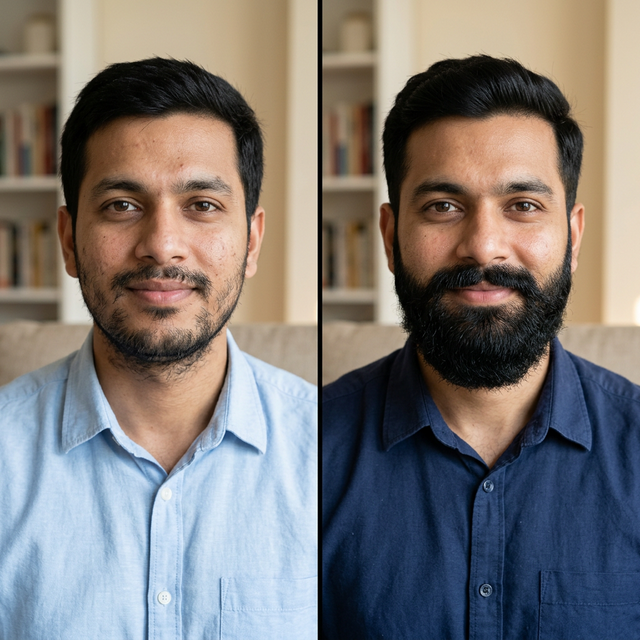
Patient demonstrating patchy beard correction via FUE method
Verified Outcome

Patchy Beard Resolution

Targeted grafting seamlessly integrating into existing sparseness.

Extensive full facial hair reconstruction outcome featuring thick density
Verified Outcome

Complete Reconstruction

Over 2,200 grafts systematically patterned for a robust, commanding profile.

Sideburn gap correction showcasing sharply angled graft placement
Verified Outcome

Sideburn Definition

Crisp, natural framing connecting the hairline to the lower jaw.

Post-Operative Recovery Horizon

Mapping the physiological progression to your final result

Days 1-7

Epithelial Healing

Minor crusting forms at the extraction and recipient zones. These small scabs naturally wash away during clinical cleansing. Pinkness resolves rapidly within the first week.

Weeks 2-4

Expected Shock Loss

A completely normal physiological shed where the transplanted hair shafts fall out. This indicates the follicle has shifted into a resting phase deep underneath the dermal layer. The anchor remains secure.

Months 3-4

Anagen Commencement

The roots awaken. New, fine hair begins piercing the skin. While initially soft, these hairs signal the beginning of your permanent aesthetic outcome.

Months 9-12

Terminal Maturation

Hairs thicken significantly, achieving their mature caliber and matching surrounding facial hair effortlessly. Peak density is actualized, capable of supporting dense grooming styles.

Frequently Asked Questions About Beard Transplant

Answered by Dr. Nyra, MD (Dermatology) · Based on 5,000+ clinical cases

How long does a beard transplant procedure take?

A typical beard transplant at Dencespot Clinic takes 4–6 hours, depending on the number of grafts required. Patchy area corrections (500–1,000 grafts) usually take 3–4 hours, while full beard reconstructions (2,000–3,500 grafts) may take up to 6 hours. The procedure is performed as a day-case under local anesthesia — you return home the same day.

Is a beard transplant permanent? Will the hair fall out?

Yes, a beard transplant is 100% permanent. The transplanted follicles are harvested from the DHT-resistant occipital region of your scalp. Due to the donor dominance principle, these follicles retain their genetic resistance to hair loss permanently. There is a normal "shock shedding" phase at weeks 2–4 where transplanted hair shafts fall out, but the roots remain anchored and permanent growth resumes by month 3–4.

Can a beard transplant camouflage acne scars on my face?

Absolutely. Beard transplant is one of the most effective methods for concealing facial acne scars, burn marks, and surgical scars. Follicular units are implanted directly into scarred tissue. While scar beds have reduced blood supply, our team uses specific graft-handling protocols and smaller micro-punches (0.6mm) to optimize survival. In our clinical experience, patients with severe cystic acne scarring consistently achieve excellent camouflage results.

How much does a beard transplant cost in Gurgaon?

At Dencespot Clinic, beard transplant costs depend on the number of grafts: ₹40,000–₹60,000 for patchy corrections (500–1,000 grafts) and ₹1,00,000–₹1,80,000 for full-density beard reconstruction (2,000–3,500 grafts). The price varies based on the chosen technique (FUE vs. DHT) and case complexity. We offer zero-interest EMI options through our financial partners.

Will I have to take time off work after the procedure?

Downtime is minimal — most patients return to work within 3–5 days. Post-operative redness and minor crusting typically diminish within the first week. We recommend avoiding strenuous exercise, steam rooms, and direct sun exposure for 2 weeks. The small extraction dots on the donor area (back of scalp) are virtually invisible within 5–7 days.

What if I don't have enough scalp donor hair?

If the scalp donor area is insufficient due to natural thinning or a previous poorly executed transplant, Dr. Nyra can use Body Hair Transplant (BHT) techniques. Follicles from the chest, abdomen, or submental (under-chin) region can supplement facial density. BHT grafts have a slightly different texture initially but blend well with facial hair over 6–12 months. This is assessed during your free pre-operative trichoscopy consultation.

What are the risks and side effects of a beard transplant?

When performed by a board-certified dermatologist, beard transplant is a safe, low-risk procedure. Common temporary effects include: mild redness (resolves in 3–5 days), pinpoint crusting at extraction and implant sites (washes away in 7–10 days), and normal shock shedding at weeks 2–4. Rare risks (<0.1% at our clinic) include localized infection, ingrown hairs, or minor asymmetry — all treatable. We provide a detailed post-operative care kit and 24/7 phone support for the first week.

Is beard transplant safe for people with diabetes or thyroid conditions?

Controlled diabetes and stable thyroid conditions are generally not contraindications for beard transplant, provided your HbA1c levels and thyroid panels are within acceptable ranges. Uncontrolled diabetes (HbA1c >8%) increases infection and delayed healing risk, so we require blood work clearance before proceeding. During your consultation, Dr. Nyra reviews your medical history and may coordinate with your endocrinologist to ensure surgical safety.

Honest Risks & What to Expect

Transparency is a core value at Dencespot Clinic. Here is an honest assessment of what the procedure involves.

What Beard Transplant CAN Do

  • ✓ Permanently fill patchy areas with natural-looking hair
  • ✓ Camouflage scars from acne, burns, or surgery
  • ✓ Create a full beard, goatee, moustache, or sideburns
  • ✓ Restore hair lost to alopecia barbae (once stabilized)
  • ✓ Provide lifelong results with no maintenance

What Beard Transplant CANNOT Do

  • ✗ Guarantee identical density to genetically thick beards
  • ✗ Work well for patients under 22 (patterns still developing)
  • ✗ Achieve results in patients with no viable donor area
  • ✗ Produce instant results — full density takes 9–12 months
  • ✗ Replace non-surgical treatments if they are adequate

Medical References & Sources

  1. Rassman WR, et al. "Follicular Unit Extraction: Minimally Invasive Surgery for Hair Transplantation." Dermatologic Surgery, 2002. PubMed
  2. Gandelman M, et al. "Beard Hair Transplantation: Techniques and Outcomes." Facial Plastic Surgery Clinics, 2020. PubMed
  3. Bernstein RM, et al. "Donor Dominance Principle in Hair Restoration Surgery." Hair Transplant Forum International, 2015. PubMed
  4. International Society of Hair Restoration Surgery (ISHRS). "Practice Census Results." ISHRS.org

Redefine Your
Aesthetic Confidence

Consult directly with Gurugram’s foremost experts in advanced aesthetic solutions.

Start Your
Success Story Today

Visit our premium Gurgaon clinic for a private consultation with our board-certified experts.

C Block, Sector 39, Gurugram, Haryana 122003

+91 8178330800

dencespot@gmail.com

Book Appointment

Professional advice tailored to your needs.

Medical Disclaimer: All medical content on this page has been written and reviewed by Dr. Nyra, MD (Dermatology, Venereology & Leprosy), Chief Consultant at Dencespot Clinic, Gurgaon. All beard transplant procedures are performed personally by board-certified physicians — never by technicians. Individual results vary based on genetics, donor density, health status, and aftercare adherence. This content is for educational purposes and does not substitute a personalized medical consultation.

Last reviewed: April 10, 2026 · Clinic registration: Haryana Medical Council · Contact for verification: +91 8178330800

Chat with Us